WATER REBEL
Clear choices. Written pricing. No surprises.
Residential water softener and whole home filtration equipment

Less scale around the home

Water Softeners for Phoenix Hard Water.

Reduce the hardness minerals behind white scale, water spots, and poor soap lather with a system sized for your home.

See My Estimate

Made for hard water problems

Softer water you can notice every day

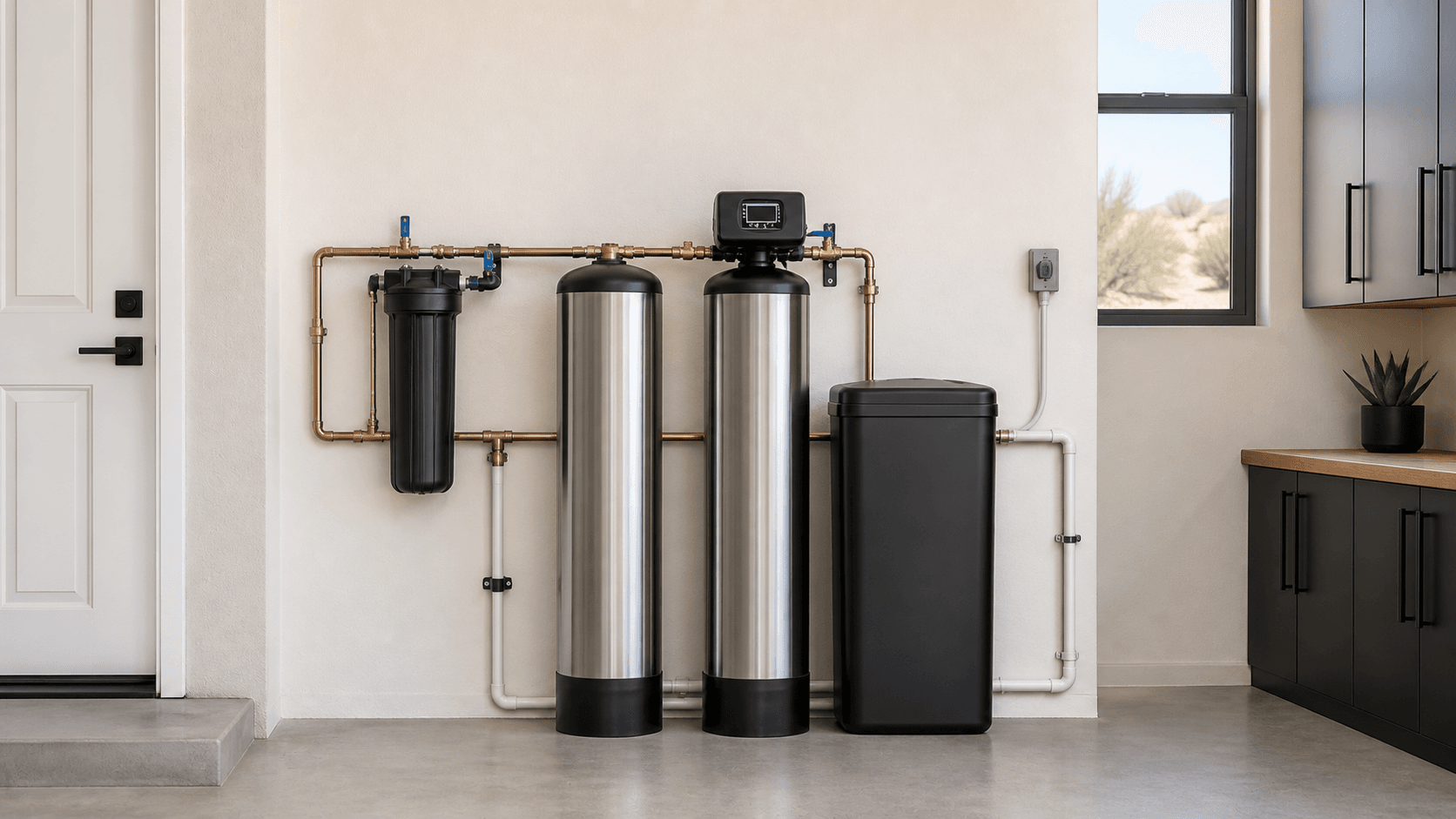
Hard water carries dissolved calcium and magnesium. A softener reduces those minerals before water moves through your plumbing, fixtures, and water using appliances.

That means less new scale to clean, fewer hard water spots, and soap that can lather and rinse more easily. A properly sized system also responds to the amount of water your household uses.

Learn About Phoenix Hard Water

Signs a softener may help

  • White scale around faucets and showerheads
  • Cloudy spots on clean glassware
  • Soap that does not lather easily
  • Mineral buildup on water using fixtures and appliances

These signs can point to hard water, but the right equipment size also depends on household water use and plumbing flow.

A simple cycle

How a water softener works

A softener uses resin to collect hardness minerals, then refreshes that resin so it can keep working.

  1. 01

    Hard water enters

    Incoming water flows through a tank filled with softening resin.

  2. 02

    Hardness is reduced

    The resin captures calcium and magnesium as water moves through the tank.

  3. 03

    The resin refreshes

    A measured regeneration cycle uses salt and water to prepare the resin for continued use.

Pair softening with whole home filtration

A softener handles hardness. Carbon and sediment filtration handle different concerns, including chlorine taste, common odors, and suspended particles. Many Phoenix homes choose both.

Explore Whole Home Filtration

Add focused drinking water filtration

Reverse osmosis sits under the kitchen sink and treats water used for drinking and cooking. It has a different job from the softener serving the rest of the home.

Explore Reverse Osmosis

Compare filtration and softening packages

See what each system includes and review published starting prices.

Compare Water Systems

Common questions

Water softener questions

What does a water softener reduce?

A water softener reduces dissolved calcium and magnesium. These hardness minerals are responsible for scale on fixtures, spots on glassware, and many of the everyday signs of hard water.

Does a water softener filter chlorine taste or odor?

No. A softener is built for hardness minerals, not chlorine taste or odor. Whole home carbon filtration can be paired with a softener when you want to address both concerns.

How often does a water softener need salt?

Salt use depends on household water use, hardness, and system settings. Check the brine tank about once a month and follow the care instructions supplied with your equipment.

Will a softener remove existing scale?

A softener reduces the hardness minerals that create new scale. It does not instantly remove deposits that are already on faucets, shower glass, or inside appliances.

What size water softener does my home need?

Sizing depends on household water use, hardness, plumbing flow, and the number of people in the home. The goal is steady service without using more salt and water than necessary.

Ready for less scale and easier cleanup?

Tell us about your home and see which softening option fits your water use.

See My Estimate