Whole home filtration
Treats sediment, chlorine taste, and common odors before water moves through the home.
Compare Water Systems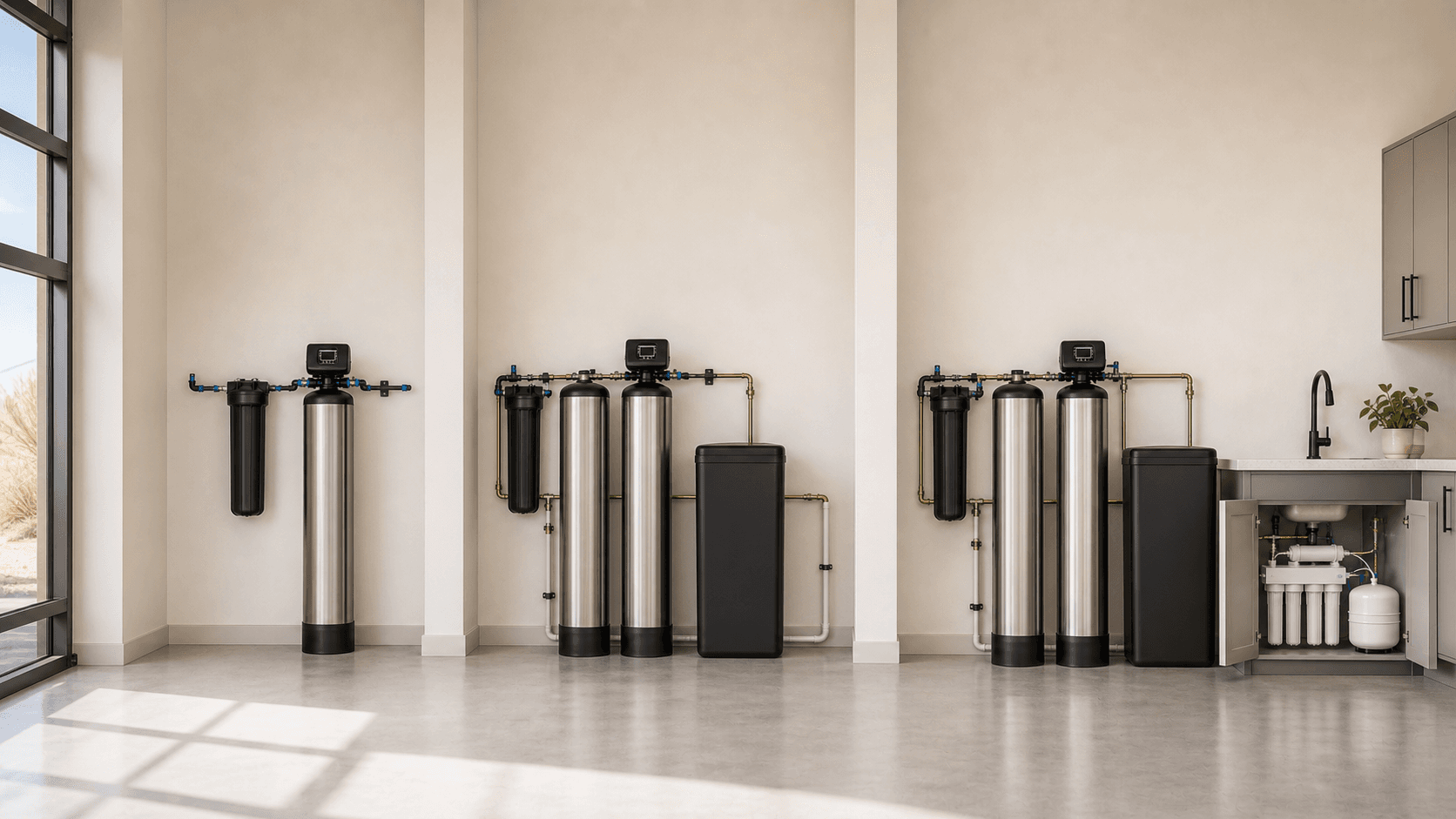
Cleaner water at every tap
Treat taste, odor, and sediment where water enters your home. We make the options simple and the starting prices easy to see.
See My EstimateOne system for the whole home
A whole home filter treats water before it reaches your kitchen, showers, laundry, and other fixtures. It is a practical way to improve everyday water throughout the house instead of relying on a filter at one faucet.
The right setup depends on what you notice in your water. Sediment filtration can catch suspended particles. Carbon filtration is commonly used to reduce chlorine taste and common odors.
Learn How Water Treatment WorksFilter performance depends on the equipment, media, water use, and proper maintenance.
Each part has a job
Hardness and drinking water goals call for different equipment. Choose only the parts your home needs.
Treats sediment, chlorine taste, and common odors before water moves through the home.
Compare Water SystemsReduces calcium and magnesium, the minerals behind scale and hard water spots.
Explore Water SoftenersAdds focused filtration under the kitchen sink for drinking and cooking water.
Explore Reverse OsmosisYour home size, water use, plumbing, and water concerns all matter. A clear recommendation should explain why each part is included.
Taste, odor, sediment, and scale point toward different solutions.
See what filtration, softening, and reverse osmosis each do.
Choose the system and understand the installation plan before scheduling.
Common questions
A whole home system treats water after it enters the main water line and before it reaches most fixtures. The filter media is selected for the water concerns you want to address.
No. Carbon and sediment filters do not reduce the calcium and magnesium that cause hardness. A water softener is the right part of the system for scale and hard water spots.
Reverse osmosis is usually a separate system placed under the kitchen sink. It provides another level of filtration for water used for drinking and cooking.
The equipment is commonly placed near the main water line in a garage or utility area. The best location depends on plumbing access, drainage, space, and the layout of your home.
Start with the taste, odor, sediment, or scale you notice. Household water use, plumbing size, available space, and the treatment goals for your home also shape the recommendation.
Tell us what you notice and compare systems with clear starting prices.
See My Estimate